The entryway is the first thing you see when you walk in the door, and it’s usually the first place shoes pile up. If yours is tight on square footage, the fix isn’t fewer shoes, it’s picking storage that actually fits the space you have.
Here are five approaches that work in small entryways, from wall-mounted racks to full cabinets, plus how to figure out which one is right for your layout.
This post may contain affiliate links.
Measure Before You Shop
Before picking a style, measure the depth of your entryway from the wall to the edge of your walkway. Building codes generally call for at least 36 inches of clear hallway width, so anything you add needs to leave people room to pass with bags or coats on. If you’re working with less than 12 inches of depth, you’ll want to stick to slim or wall-mounted options rather than a standard floor cabinet.
Wall-Mounted Shoe Racks
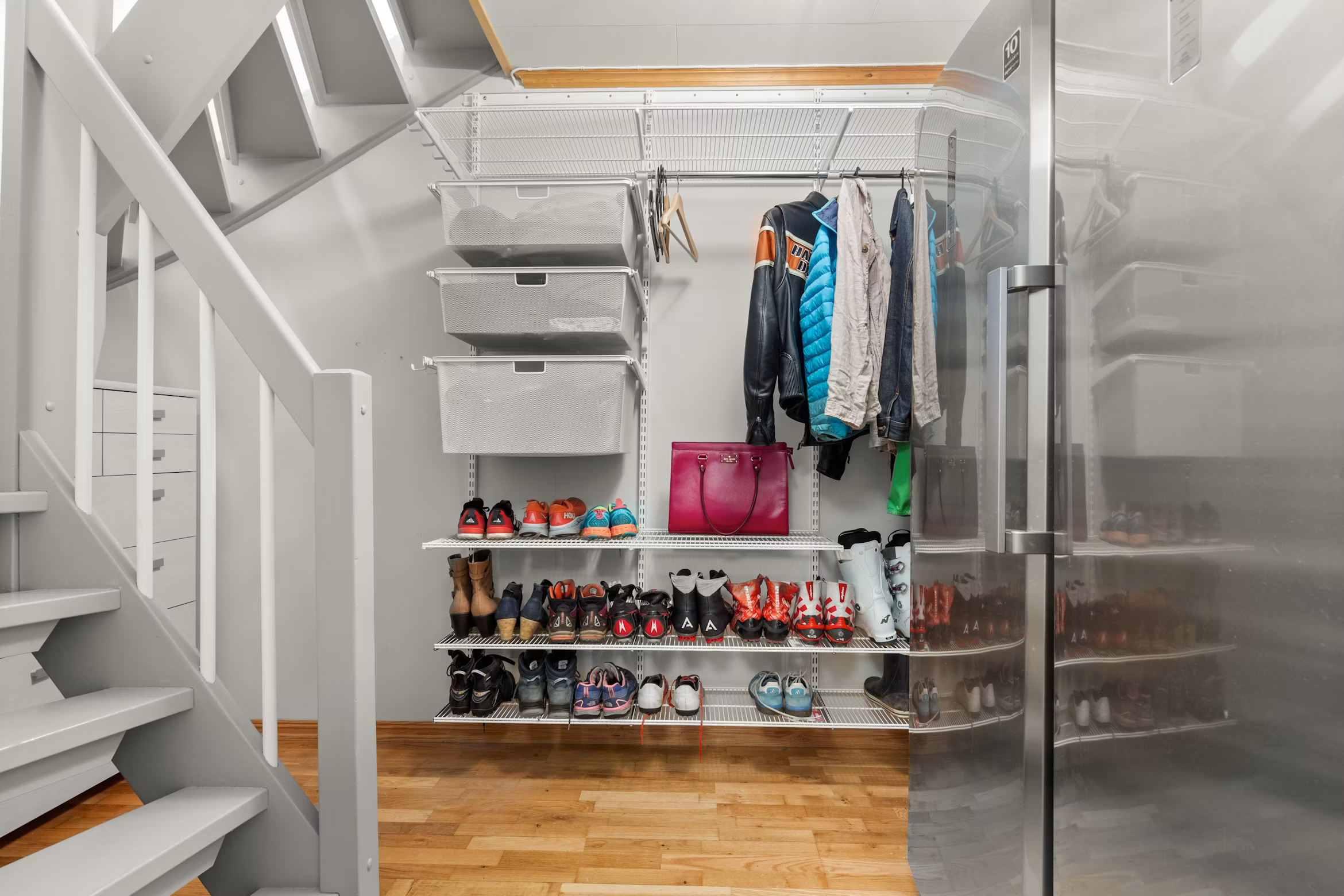
A wall-mounted rack is the best option if you have zero floor space to spare. These hang directly on the wall and hold shoes in tiers, so they take up depth measured in inches rather than feet. They’re an easy fit for apartments and mudrooms without a closet, and since most attach with just a few screws, renters can take them down without leaving much of a mark. The one thing worth checking before you buy is the weight limit — a fully loaded rack is heavier than it looks, so make sure the mounting hardware is rated to hold it.
Slim Flip-Drawer Cabinets
If you’d rather keep shoes out of sight, a narrow cabinet with flip-down drawers gives you closed storage in a footprint as small as 7–10 inches deep. Each drawer usually holds one or two pairs, and the closed front keeps the entryway looking tidy even when the drawers are packed — a good fit for households with more than a couple of pairs in daily rotation. Taller boots are the main limitation here, so check the interior drawer clearance rather than just the cabinet’s exterior dimensions before you commit to one.
Over-the-Door Organizers
An over-the-door shoe organizer takes up no floor or wall space at all, since it hangs on an existing door. It’s one of the few options that’s fully renter-friendly, since nothing gets drilled or mounted — just hang it and go. Fabric pocket versions can sag over time under heavier shoes, so if you’re storing boots or sneakers rather than flats, a rigid-pocket version will hold its shape a lot longer.
Stackable Cubbies
Modular cubbies let you build a shoe storage setup piece by piece and rearrange it as your collection or space changes. They sit on the floor but have a small footprint per cube, so they’re a good way to use a corner other furniture can’t fill. The main thing to watch is height — stacked too tall without anchoring, cubbies can tip, so keep taller stacks pushed against a wall.
Storage Bench
If you want a place to sit while putting shoes on, a bench with built-in storage does double duty. These take up more floor space than the other options here, so they work best in entryways with at least a couple of feet to spare rather than the tightest layouts. Measure the bench itself, not just its storage compartment, against your walkway clearance before you buy — the seat depth is usually what eats into the space, not the storage underneath.
Quick Comparison
| Option | Depth Needed | Pairs Held | Visibility |
|---|---|---|---|
| Wall-mounted rack | 6–9″ | 6–10 | Visible |
| Flip-drawer cabinet | 7–10″ | 6–12 | Hidden |
| Over-the-door organizer | 0″ (hangs on door) | 12–24 | Visible |
| Stackable cubbies | Varies (modular) | 4–8 per unit | Visible |
| Storage bench | 14–18″+ | 4–8 | Hidden (under seat) |
FAQ
What if my entryway has no closet at all? Wall-mounted racks and over-the-door organizers are the two options that need no floor space and no closet — they’re usually the best starting point for a truly closet-free entry.
How many pairs should I actually keep by the door? A good rule of thumb is only what gets worn in a given week — daily shoes, current-season boots or sandals. Everything else stores better in a bedroom closet or under-bed bin, which keeps the entryway from becoming overflow storage.
Can I combine more than one of these? Yes — a lot of small entryways end up using two together, like an over-the-door organizer for off-season shoes and a small bench or rack for daily pairs.
Looking for more entryway solutions? Check out our post on small entryway organization ideas for console tables, key organizers, and more — or get our free Small-Space Storage Checklist — a room-by-room guide to make the most of your space below.