The entryway is the first and last space you pass through every day, and in a small home it’s often little more than a few square feet by the front door. Without a system, that space fills up fast — shoes piled by the door, mail stacking on any flat surface, keys lost in the shuffle. Here’s how to organize a small entryway so it actually works for daily life instead of becoming a dumping ground.
This post may contain affiliate links.
Why Entryways Get Cluttered Fast
Unlike most rooms, an entryway handles a high volume of small, daily-use items — keys, mail, shoes, bags, outerwear — all things you touch every single day. Without a dedicated spot for each category, they end up wherever’s closest, which is usually the floor or the nearest flat surface. The fix isn’t more space; it’s giving each category an obvious, easy-to-use home.
A Compact Console Table Anchors the Space
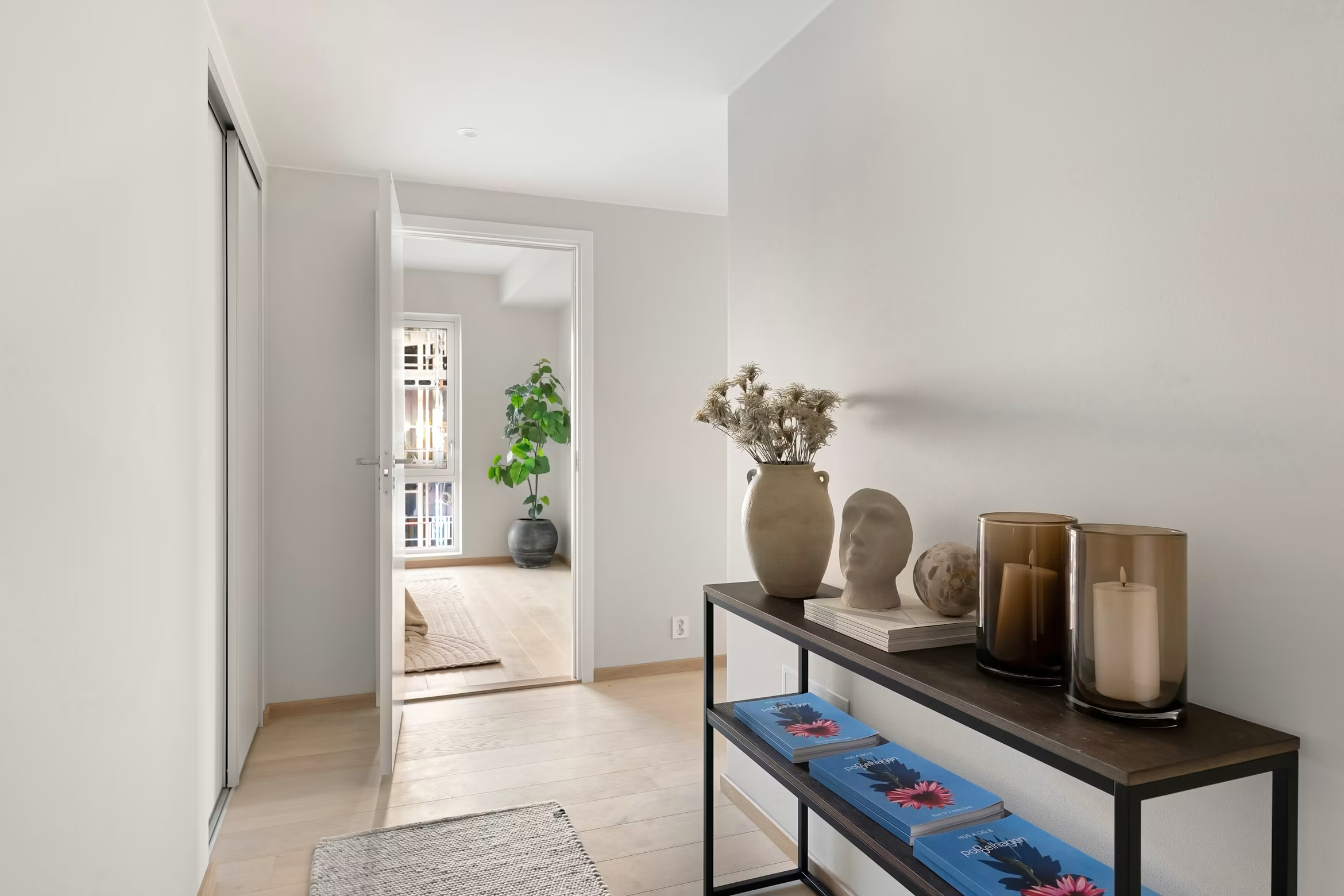
Even a narrow entryway can usually fit a slim console table against a wall. A small console table with a drawer or shelf gives you a spot to set down keys, mail, or a bag the moment you walk in, plus hidden storage in the drawer for things you don’t want visible (sunglasses, chargers, loose items). Look for a narrow depth (under 12 inches) if your entryway is tight — plenty of console tables are designed specifically for this.
Wall-Mounted Key and Mail Organizers
If floor space is too tight even for a small table, go vertical instead. A wall-mounted key and mail organizer combines hooks for keys (and sometimes leashes or bags) with a small shelf or slot for mail, all in a footprint of just a few inches of wall space. This is one of the most effective small-entryway fixes because it solves two common clutter points — loose keys and stray mail — in a single compact piece.
Shoe Storage Without a Mudroom
Most small entryways don’t have room for a full shoe cabinet. A few space-efficient alternatives:
- A slim shoe rack tucked against a wall, sized to your entryway’s actual width rather than a standard large rack
- A shoe tray or mat by the door — not full storage, but keeps shoes contained to one spot instead of scattered
- Over-the-door shoe organizers on the inside of a nearby closet door, if you have one close to the entry
Hooks for Everything Else
Wall hooks are one of the cheapest, most flexible entryway upgrades. A row of hooks at the right height handles coats, bags, umbrellas, and anything else that doesn’t have a natural home — and unlike a closet, they’re visible and immediate, which matters for things you grab on your way out the door.
Bench or Seating (If You Have the Room)
If your entryway can fit it, a small bench — ideally one with storage underneath — gives you a spot to sit while putting on shoes and doubles as another storage surface. This isn’t essential in a very tight space, but it’s a meaningful upgrade if you have even two or three feet of floor space to spare.
A Simple Layout Approach
- Identify your daily “drop zone” items: keys, mail, shoes, bags, coats
- Assign each category its own spot — a hook, a tray, a drawer — rather than a shared catch-all surface
- Keep frequently used items (keys, everyday shoes) at the most accessible height and position
- Store anything used less often (seasonal shoes, extra bags) further back or higher up
Frequently Asked Questions
What if my entryway has no floor space for furniture at all? Wall-mounted solutions (key/mail organizers, hooks, a slim floating shelf) can handle most entryway needs without using any floor space, which makes them the best option for very tight spots like narrow hallways or apartment entries directly at the door.
How do I keep shoes from piling up even with a shoe rack? Sizing the rack to hold roughly the number of pairs your household actually keeps by the door (not every pair you own) helps — an undersized rack gets overwhelmed and bypassed, while oversized racks waste space and encourage clutter to spread around them.
Is a console table worth it in a very narrow entryway? Yes, as long as you choose a narrow-depth table (many are made specifically for tight spaces) — even a shallow table gives you a landing spot for daily items that a bare wall doesn’t.
Looking for more small-space organization ideas? Check out our post on vertical storage solutions or get our free Small-Space Storage Checklist — a room-by-room guide to make the most of your space below.