
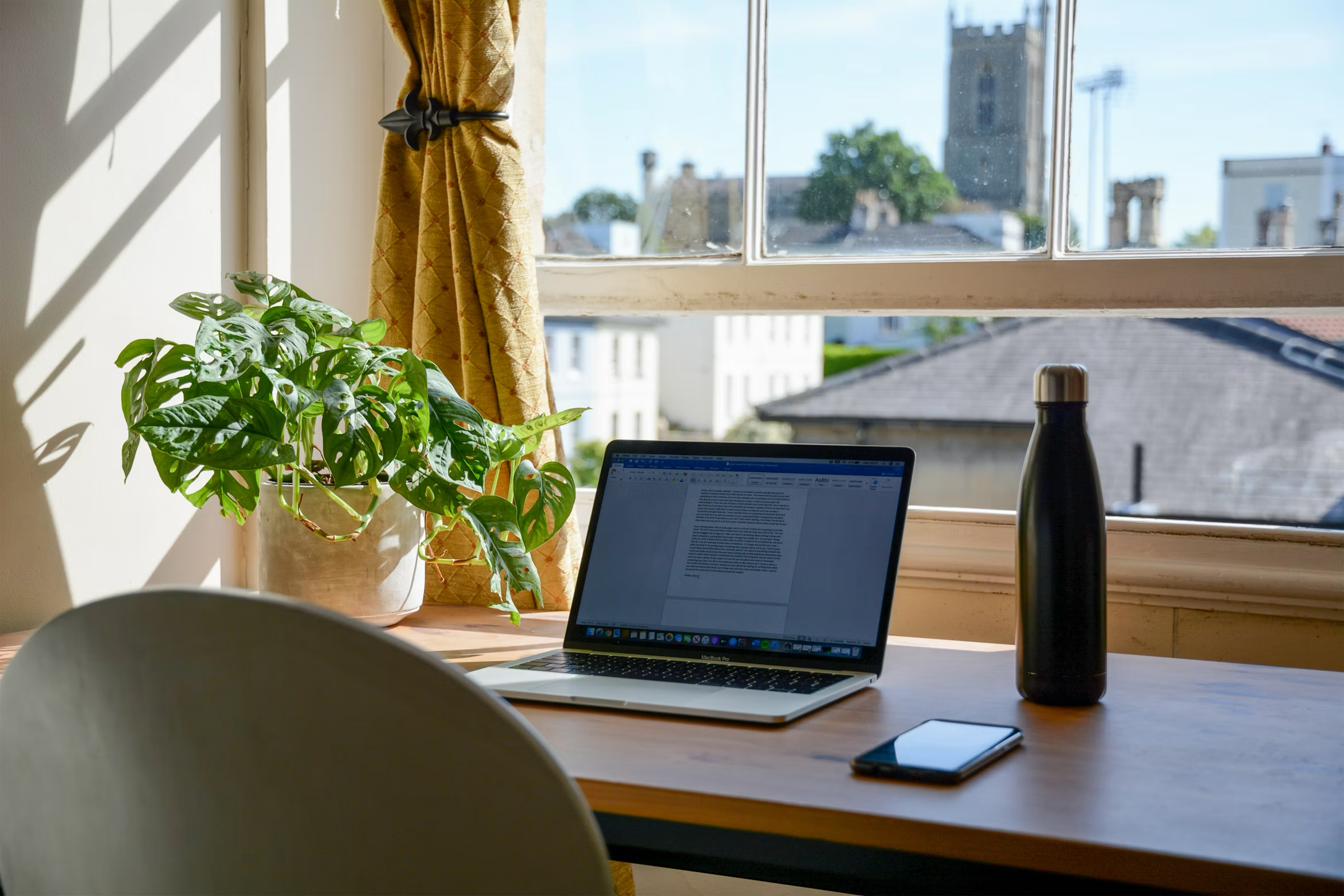
Not having a spare room doesn’t mean you can’t have a real workspace. In a small apartment, a home office is usually less about a dedicated room and more about carving out a consistent, functional corner — one that works for focus during the day and disappears (visually and mentally) once you’re done. Here’s how to set one up.
This post may contain affiliate links.
Pick a Spot With a Boundary, Even a Soft One
A home office doesn’t need four walls to function like one — it needs a consistent boundary that signals “this is where work happens.” A few realistic options in a small apartment:
- A corner of the bedroom or living room, defined by furniture placement rather than a wall
- A closet converted into a compact desk nook (sometimes called a “cloffice”)
- A section of a shared room separated visually with a room divider
The goal is consistency — using the same spot every time helps your focus switch on faster than working from wherever happens to be open that day.
A Room Divider Creates Separation Without Construction
If your workspace shares a room with living or sleeping space, a folding room divider creates a visual (and sometimes acoustic) boundary without any permanent changes. This matters more than it might seem — a workspace that’s visually blended into the rest of the room makes it harder to mentally “leave work” at the end of the day, which is a common struggle with small-apartment home offices specifically.
Choose a Desk Sized to the Space, Not the Job
A common mistake is buying a desk sized for a dedicated office, then wedging it into a spot that was never meant to hold one. A compact desk built for small spaces (many run 27-32 inches wide with built-in drawer storage) fits into a bedroom corner or closet nook far more comfortably than a standard 48-60 inch office desk, while still giving you drawer storage for supplies.
Keep Cables and Supplies Contained
A small office setup gets visually chaotic fast if cables and supplies aren’t corralled from the start. This pairs directly with our cable and cord organization guide — worth setting up a cable management system at the same time you set up the desk, rather than after clutter’s already built up.
Make It Easy to “Close” at the End of the Day
Since a small-apartment office often shares space with living areas, having a way to visually put work away matters more than in a dedicated room:
- A room divider that folds closed
- A desk with drawers to clear the surface quickly
- A closet-based setup that can literally be closed with a door
This isn’t just aesthetic — being able to visually close off a workspace helps create a mental boundary between work time and downtime, which is genuinely harder to maintain when your office is also your bedroom or living room.
Frequently Asked Questions
Is a closet “cloffice” a realistic home office setup? Yes, for many jobs — a closet with the doors removed (or left open) and a small desk fitted inside can work well for laptop-based work, though it’s worth checking that there’s enough ventilation and outlet access before committing to the space.
Do I need a room divider if my workspace is already in a corner? Not necessarily — a divider matters most when your desk is highly visible from other parts of the room; a corner that’s naturally out of the main sightline may not need one.
What’s the most important thing to get right in a small home office setup? Consistency of location tends to matter more than the specific furniture — using the same spot every time helps establish the habit and focus that a dedicated office room provides more automatically.
Looking for more small-space furniture ideas? Check out our guide on multi-functional furniture for small apartments for more pieces that adapt to tight spaces or get our free Small-Space Storage Checklist — a room-by-room guide to make the most of your space below.