A small bedroom can feel a lot more cramped than its actual square footage, and often the culprit isn’t a lack of space — it’s furniture placed the way you’d arrange a much bigger room. Getting the layout right can make a small bedroom feel meaningfully more open, without buying anything new at all. Here’s how to think through it.
This post may contain affiliate links.
Start With the Bed, Not the Room’s Center
In a small bedroom, the bed is almost always the largest piece of furniture, so its placement determines how much usable space is left for everything else. A few placement principles that consistently free up more room:
- Push the bed against the longest wall rather than centering it, which opens up floor space on both sides instead of splitting a small amount of space into two even smaller strips
- Consider a corner placement if the room is especially tight — anchoring the bed in a corner (headboard against one wall, side against another) frees up an entire adjacent wall for other furniture
- Skip a full walking path around all four sides — in a small room, having full clearance on just one or two sides of the bed is usually enough, and reclaiming the rest for storage or furniture makes a bigger difference
Choose Furniture That Matches the Room’s Actual Proportions
Standard-sized furniture is often built for average-to-large bedrooms, and it shows in a small one. A couple of swaps that consistently help:
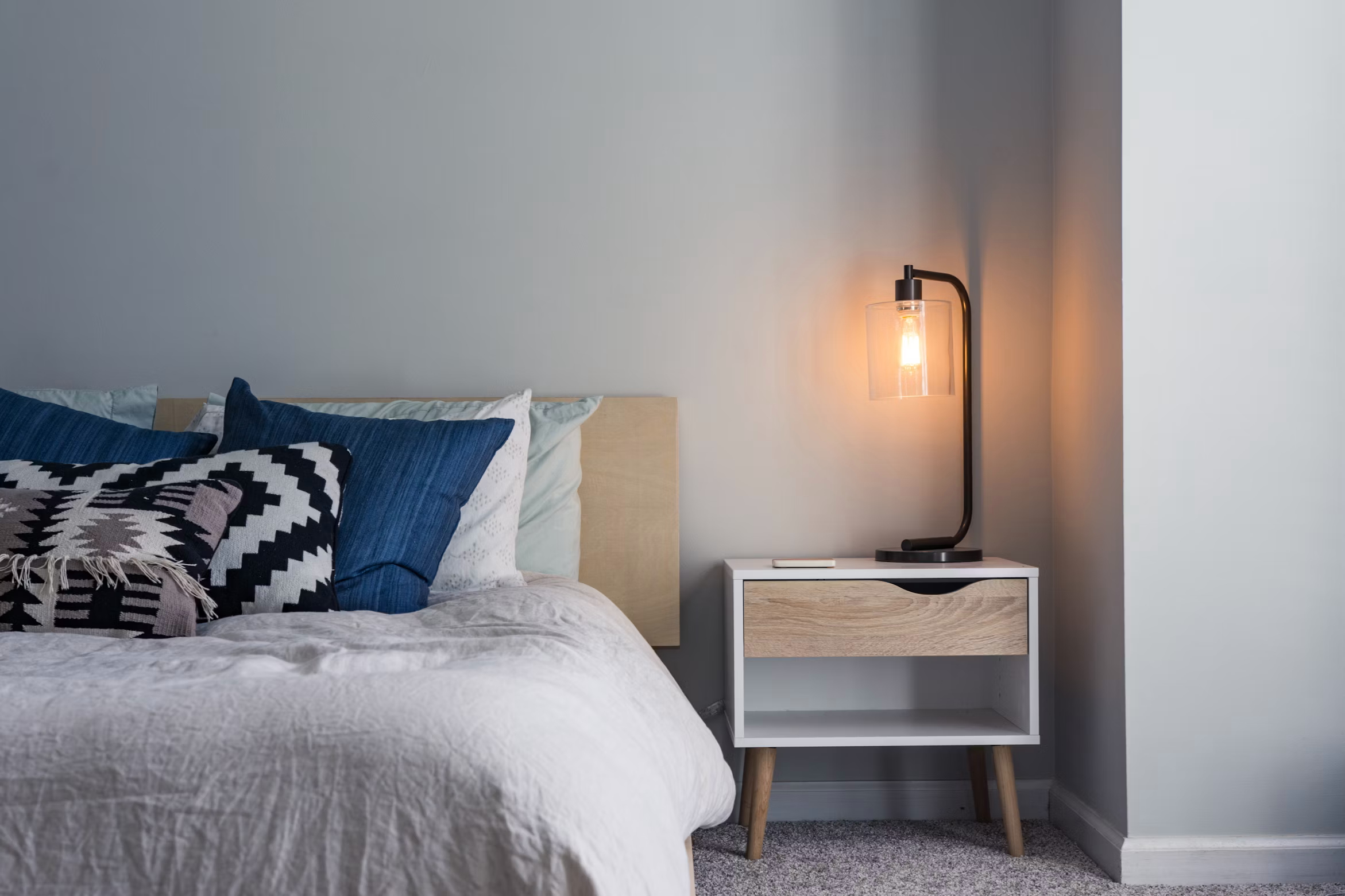
- A narrow nightstand (some run as slim as 8 inches wide) instead of a standard-depth one preserves walking space beside the bed without sacrificing a spot to set down a lamp or phone
- A wall-mounted or over-the-door mirror instead of a full-length freestanding one saves the floor footprint a stand-mounted mirror requires, while still giving you the same function
Use Walls Before You Use Floor Space
Every piece of furniture that touches the floor takes up room a small bedroom often can’t spare. Before adding another dresser or shelf, consider what could move to the wall instead — floating shelves, wall-mounted hooks, or a wall-mounted mirror all accomplish the same goals as their floor-standing counterparts without the footprint.
Keep Sightlines Open
A small room feels larger when you can see across it without obstruction. Practically, this means:
- Avoid placing tall furniture in the direct sightline from the doorway
- Keep the tallest pieces (a dresser, a bookshelf) along the same wall rather than spread around the room, so the eye reads one solid mass instead of several scattered obstacles
- Leave at least one wall largely clear, even if it means being more efficient elsewhere — a single open wall does more for a room’s sense of space than evenly distributing furniture on every wall
A Simple Layout-Planning Approach
- Measure the room and sketch it roughly to scale (even a simple grid on paper works)
- Place the bed first, against the longest or most logical wall
- Add only the furniture you genuinely need daily — a nightstand, somewhere for clothes — before considering anything extra
- Test the layout for a few days before committing to a “final” arrangement; what looks right on paper doesn’t always feel right in the room
Frequently Asked Questions
Is it better to center a bed in a small room or push it against a wall? Pushing it against a wall almost always frees up more usable floor space in a small bedroom, since it consolidates the open floor area into one larger, more useful section rather than splitting it evenly on both sides.
Should I avoid a dresser entirely in a very small bedroom? Not necessarily — if closet space is limited, a dresser may still be necessary, but consider a narrower or taller model (more vertical, less floor footprint) over a wide, low one.
How do I make a small bedroom feel bigger without buying new furniture? Reworking the existing layout — moving the bed to a wall, consolidating tall furniture to one side, keeping at least one wall clear — often creates a noticeably more open feel without any new purchases at all.
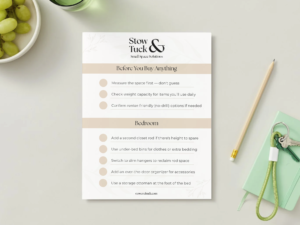
Looking for more bedroom storage ideas? Check out our post on best under-bed storage bins for small bedrooms or get our free Small-Space Storage Checklist — a room-by-room guide to make the most of your space below.