The cabinet under a bathroom sink is often the most chaotic storage spot in the entire bathroom — plumbing cuts through the middle of the space, items get stacked without any real system, and finding anything means digging past everything else first. In a small bathroom without much other storage, getting this space organized makes a real difference. Here’s how.
This post may contain affiliate links.
Why Under-Sink Cabinets Are So Hard to Organize
Unlike a regular cabinet, under-sink storage has to work around the pipes and plumbing running through the middle of it, which breaks up the space into awkward sections instead of one clean rectangle. Most off-the-shelf storage products assume a uniform, empty box — which is exactly what this space isn’t. The fix is choosing products specifically designed to work around plumbing, not just any generic bin.
Pull-Out Organizers Built for Plumbing
An L-shaped, two-tier pull-out organizer designed specifically for under-sink cabinets solves the plumbing problem directly — the L-shape wraps around pipes instead of trying to sit flush against a back wall like a standard shelf would. Sliding the organizer out gives full visibility and access to everything, instead of reaching blindly into the back of a dark cabinet.
Using Vertical Space with a Tension Rod
The area above whatever sits on the cabinet floor is usually empty air — and it’s some of the easiest space to reclaim. A simple spring tension rod installed toward the front of the cabinet lets you hang spray bottles by their trigger handles, freeing up the entire floor of the cabinet for other items. It’s inexpensive, requires no tools or drilling, and takes just a few minutes to set up.
Stackable Bins for Smaller Items
For loose items that don’t hang well (extra soap, cotton balls, small toiletries), stackable bins sized to fit around the plumbing on either side of the cabinet keep things contained and easy to pull out, rather than sliding into the space behind the pipes where they’re hard to reach.
A Simple Setup Approach
- Empty the cabinet completely and sort items into categories (cleaning supplies, extra toiletries, rarely used items)
- Measure the cabinet’s interior width, depth, and the space around the plumbing before buying anything
- Add a tension rod near the top for hanging items
- Use a pull-out organizer or stackable bins for the floor of the cabinet
- Keep daily-use items toward the front, rarely used items toward the back or on a higher tier
Frequently Asked Questions
Will a pull-out organizer fit around unusual plumbing configurations? L-shaped organizers are specifically designed with an offset layout to work around a central pipe, but it’s worth measuring your cabinet’s specific plumbing layout against the product’s dimensions before buying, since configurations do vary.
Is a tension rod strong enough to hold multiple spray bottles? Lighter loads (a few spray bottles) work well on a standard tension rod; if you’re hanging several heavier bottles, look for one with a higher weight rating, or distribute the load across two rods at different heights instead of one.
How often should I go through and re-sort this space? Since cleaning supplies and toiletries get used up and replaced fairly often, a quick check every few months (rather than a full overhaul) is usually enough to keep it from sliding back into clutter.
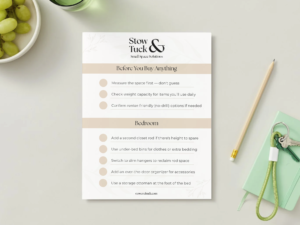
Looking for more bathroom solutions? Check out our guide on bathroom organization ideas for tiny bathrooms for more small-bathroom fixes or get our free Small-Space Storage Checklist — a room-by-room guide to make the most of your space below.