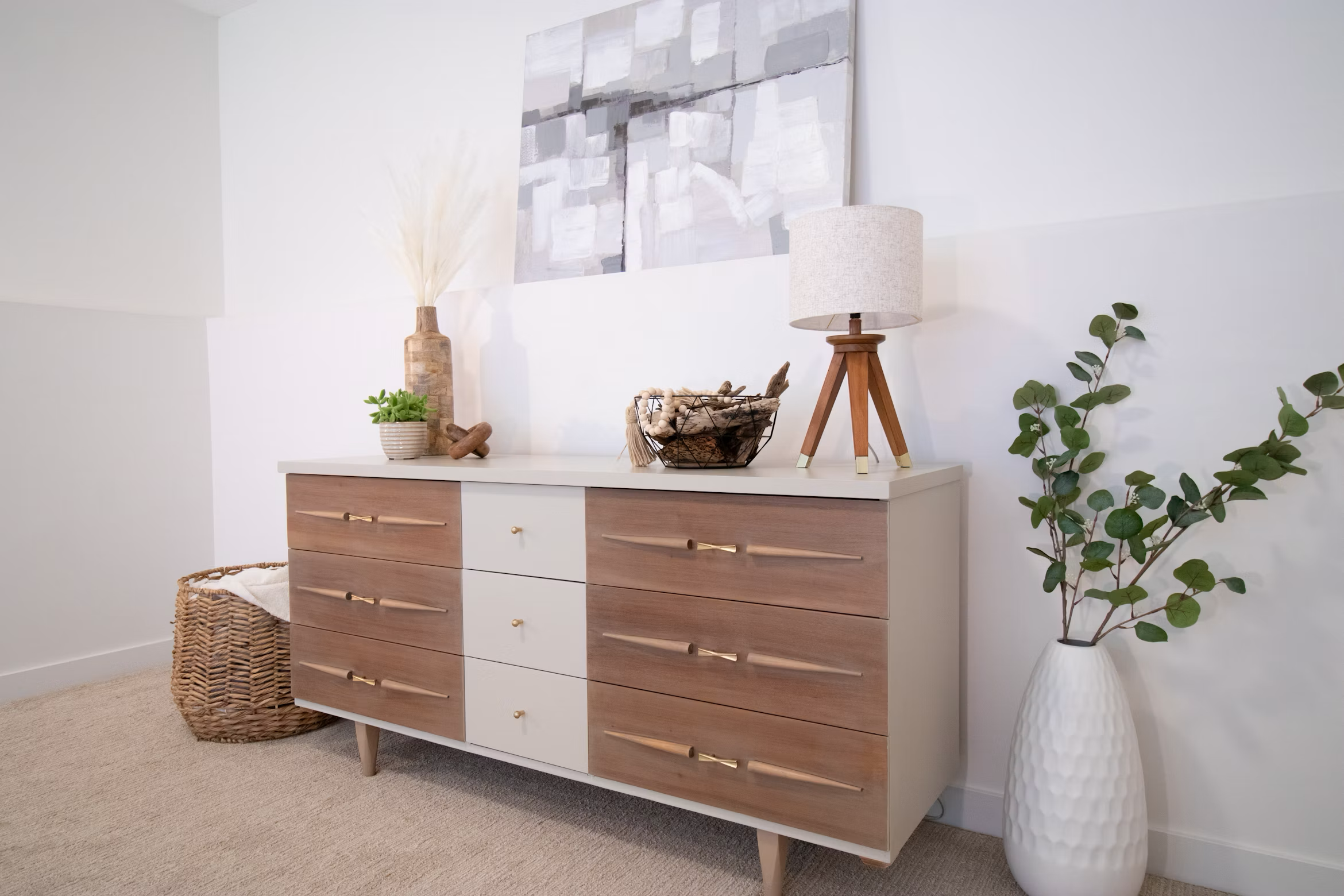
A dresser without any internal structure turns into a jumble fast. Socks migrate into the underwear drawer, folded shirts collapse into a pile the moment you pull one out, and a drawer that looked organized in January looks like a laundry basket by March. In a small bedroom where the dresser is doing more work than usual, a little structure inside each drawer goes a long way.
This post may contain affiliate links.
Why Drawers Need Dividers More Than You’d Think
A drawer is really just a box, and boxes without dividers let everything shift and mix the moment you open and close them. This matters more in a small bedroom specifically, since a smaller dresser usually means fewer drawers total, so each one ends up holding more categories of items than it would in a bigger room with more storage spread out.
Adjustable Dividers for Larger Drawers
For a standard clothing drawer, spring-tension drawer dividers split one open space into defined sections without any permanent installation. They expand to fit a range of drawer widths and can be repositioned as your needs change, which matters if you ever swap dressers or rearrange what’s stored where. A single drawer might use two or three dividers to separate, say, t-shirts from shorts from pajamas.
Fabric Bins for Smaller Items
Socks, underwear, and other small items don’t divide well with rigid dividers alone. A set of collapsible fabric storage bins sized to fit inside a drawer keeps these categories contained and easy to grab as a set, rather than sliding loose around whatever divider section they landed in. Because they fold flat, unused bins can be stored away rather than taking up space when you don’t need the full set.
Organize Drawers by Frequency, Not Just Category
Beyond dividing by item type, think about which drawers are easiest to reach. The top one or two drawers, at a height you don’t have to bend for, are worth reserving for what you actually wear most often. Off-season clothing, formal wear, or anything used rarely can go in the bottom drawer, where a bit of extra reaching matters less.
Folding Method Matters as Much as Dividers
Even with good dividers, clothes folded loosely still shift and lose their shape over time. Vertical folding (standing items on their edge rather than stacking them flat) keeps each piece visible from above and prevents the “dig to the bottom” problem that flat stacking causes. This pairs especially well with divided drawers, since each compartment can hold a small row of vertically folded items instead of one leaning pile.
Frequently Asked Questions
How many dividers does a standard dresser drawer actually need? Two or three is usually enough for a typical clothing drawer, splitting it into broad categories rather than many tiny sections; over-dividing a drawer can make it harder to fit larger folded items.
Are fabric bins or rigid dividers better for a small dresser? They serve different purposes. Dividers work well for larger folded items like shirts, while fabric bins are better suited to loose smaller items like socks or accessories that don’t stack neatly on their own.
Is vertical folding worth the extra effort compared to regular flat folding? For drawers you access daily, yes. Being able to see everything in a drawer at a glance saves real time over the course of a week, even though the initial folding takes slightly longer than a flat stack.
Looking for more bedroom storage ideas? Check out our post on small bedroom furniture layout ideas for more ways to make a small bedroom work harder or get our free Small-Space Storage Checklist — a room-by-room guide to make the most of your space below.