Most pantry organization advice assumes a walk-in with rows of shelving. If what you actually have is a single kitchen cabinet or a narrow closet doing pantry duty, that advice doesn’t translate. A small pantry can still be genuinely organized — it just needs a system built for limited space, not a scaled-down version of a big one.
This post may contain affiliate links.
The Core Problem With Small Pantries
A small pantry space (a cabinet, a narrow closet, or a few shelves) usually fails not because there isn’t enough room, but because the space isn’t being used efficiently. Boxes and bags of different shapes waste vertical space, cans get shoved to the back and forgotten, and there’s rarely any real system for keeping like items together. Fixing this is less about maximizing square footage and more about maximizing how well the existing space is used.
Get Loose Bags and Boxes Into Bins
Snack bags, opened boxes, and loose packets are some of the biggest space-wasters in a small pantry — they don’t stack well and tend to spread out rather than stay contained. Clear pantry bins with an open front (so you can grab items without lifting a lid) group these loose items into a single, contained space rather than letting them sprawl across a shelf.
Use Tiered Organizers for Cans and Jars
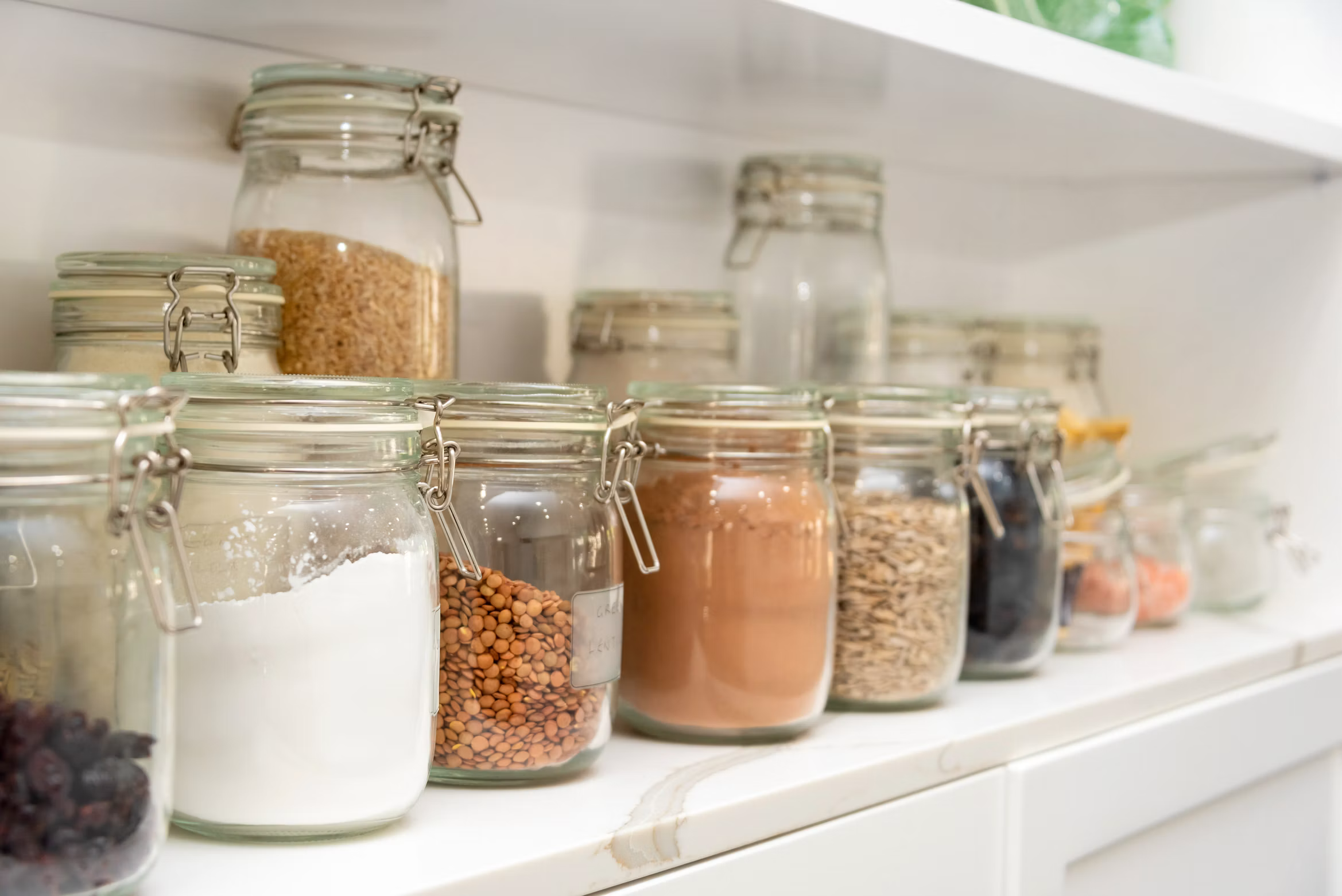
Cans and jars stored in a single flat row waste the vertical space above them, and anything at the back becomes invisible. An expandable tiered shelf organizer solves this by stepping items upward, so everything from front to back stays visible — meaning you can actually see what you have instead of finding three duplicate cans of the same thing after they’d been hiding behind each other.
Group by Category, Not by Whatever Fits
In a small pantry, it’s tempting to just wedge items wherever there’s space. A more effective approach is to designate rough zones — baking supplies together, snacks together, canned goods together — even if the zones are small. This makes it much faster to find what you need and, just as importantly, makes it obvious when you’re running low on something, since gaps in a category are more noticeable than gaps in a random jumble.
Use the Door and Vertical Wall Space
If your pantry is a closet or cabinet with a door, the inside of that door is extra storage most people don’t use. A door-mounted organizer can hold spice packets, snack bags, or small condiment bottles — items that are easy to lose track of on a regular shelf. Similarly, if there’s any exposed vertical wall space, a slim wall-mounted shelf can add another full tier of storage without touching the floor.
A Simple Setup Approach
- Empty the pantry completely and group items by category
- Measure your shelves’ width and depth before buying any organizers
- Add a tiered organizer to the shelf holding cans or jars
- Move loose bags and packets into bins, grouped by category
- Use the door (if there is one) for smaller, frequently grabbed items
Frequently Asked Questions
What if my pantry is just a single shelf, not a full cabinet? The same principles still apply at a smaller scale — a tiered organizer and a couple of bins can meaningfully increase how much a single shelf holds and how easy it is to see what’s there.
How often should I reorganize a small pantry? A quick check every month or so (rather than a full overhaul) is usually enough, since small pantries fill up faster than larger ones and benefit from more frequent light maintenance.
Are clear bins necessary, or is opaque fine for a pantry? Clear bins make it easier to see contents at a glance, which matters more in a pantry than almost anywhere else in the kitchen, since forgotten food is a common source of waste — opaque bins work but benefit from labels to avoid the same problem.
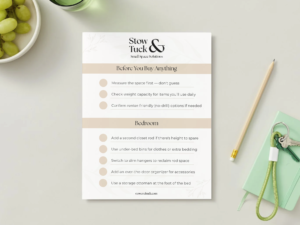
Looking for more kitchen organization ideas? Check out our post on studio apartment kitchen organization for more small-kitchen solutions or get our free Small-Space Storage Checklist — a room-by-room guide to make the most of your space below.