Spices multiply fast — a jar for every recipe you’ve tried, duplicates you forgot you had, and no real system for finding what you need mid-cook. In a small kitchen without much cabinet or counter space to spare, spice clutter adds up quickly. Here’s how to organize spices without dedicating a cabinet shelf you don’t have.
This post may contain affiliate links.
Why Spices Are Harder to Organize Than They Seem
Spice jars are small individually, but they add up to a surprising amount of shelf space collectively, and standard cabinet shelves waste most of their height storing them — a shelf tall enough to fit a cereal box leaves a foot of empty air above every spice jar on it. The fix is almost always about using vertical space and non-cabinet surfaces more efficiently, not finding more cabinet room.
Tiered Organizers for Inside a Cabinet
A tiered spice rack organizer designed for a cabinet door or wall mount steps jars upward so every label stays visible from the front, instead of hiding behind whatever’s in front of it. Many mount directly to the inside of a cabinet door, which uses space that’s otherwise completely empty — a genuinely easy win if you have a cabinet near the stove with room on the door.
Magnetic Racks for Zero Extra Footprint
If cabinet space is especially tight, a magnetic spice rack that attaches directly to the side of your refrigerator solves the problem without using any cabinet, counter, or drawer space at all. These typically hold a handful of jars each and can be added incrementally — start with one or two and add more as needed, rather than committing to a large organizer upfront.
Drawer-Based Storage for a Different Kind of Small Kitchen
Some small kitchens have more drawer space than cabinet space. In that case, a shallow drawer insert designed specifically for spice jars (angled so labels are visible from above) can work better than any wall or cabinet-mounted option — worth considering if your kitchen’s layout leans this direction.
Decant for Space and Consistency
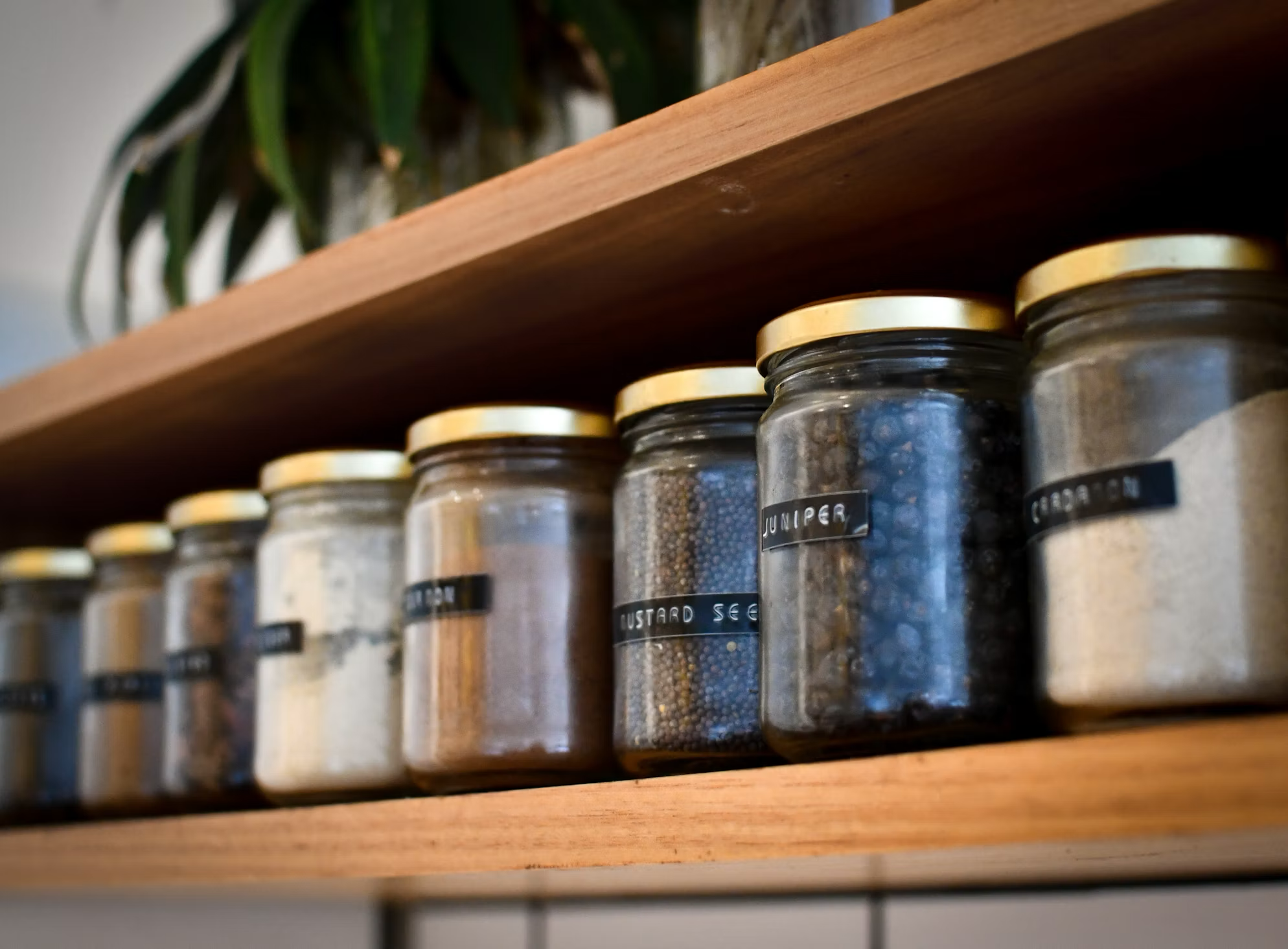
Spices bought in their original packaging come in a huge range of shapes and sizes, which makes any organizer harder to use efficiently. Decanting into a uniform set of small jars — even without buying a dedicated “spice organizer kit” — makes any storage method (tiered, magnetic, drawer) noticeably more space-efficient, since uniform containers stack and arrange far more predictably than mismatched packaging.
A Simple Setup Approach
- Take stock of what you actually use regularly versus what’s expired or rarely touched
- Choose a storage method based on what space you actually have available (cabinet door, fridge side, drawer)
- Decant into uniform containers if you want the most space-efficient result
- Keep your most-used spices in the most accessible spot, regardless of which method you choose
Frequently Asked Questions
Do magnetic spice racks work on all refrigerators? They require a magnetic (typically stainless steel or painted steel) surface — some modern refrigerator finishes aren’t magnetic, so it’s worth testing with a small magnet on your specific fridge before buying a rack.
Is it worth buying matching spice jars, or can I keep the original packaging? Matching jars make any storage system noticeably more space-efficient and easier to label consistently, but it’s an optional upgrade — tiered and magnetic organizers both work with original packaging too, just less uniformly.
What’s the best spice storage option if I have no extra cabinet space at all? A magnetic fridge rack is usually the best fit here, since it uses a surface that isn’t otherwise functioning as kitchen storage at all.
Looking for more kitchen organization ideas? Check out our post on how to organize a small pantry for more small-kitchen storage solutions or get our free Small-Space Storage Checklist — a room-by-room guide to make the most of your space below.