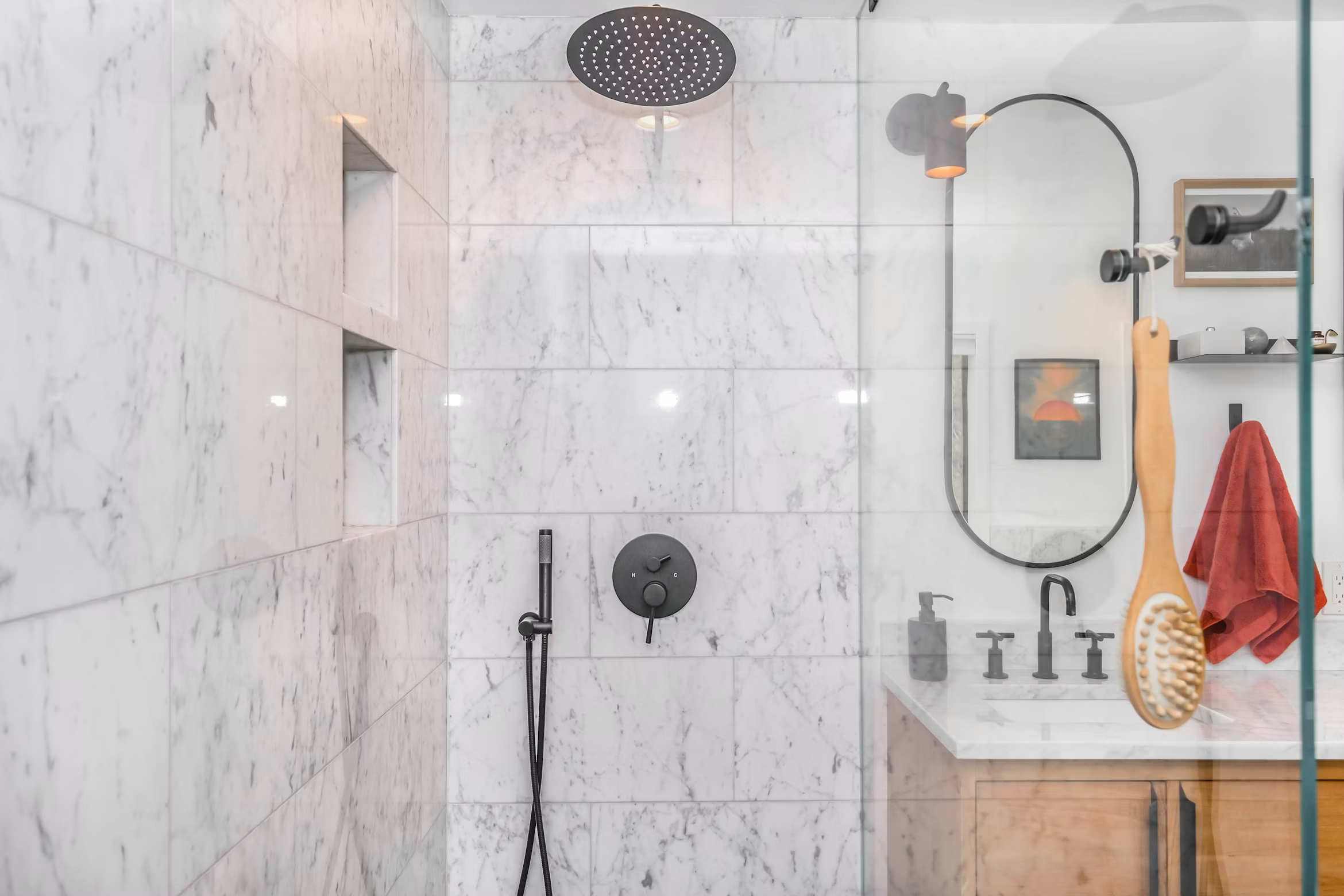
Showers in small bathrooms tend to run out of room fast. Bottles line the tub edge, a bottle of conditioner ends up on the floor, and the razor slides off the ledge every few days. Most of it comes down to the shower having no real storage built in, which is a hard problem to solve when drilling into tile isn’t an option.
Here are a few ways to add shelf space inside a shower without a single hole in the wall.
This post may contain affiliate links.
Look at Your Shower Setup First
The right fix depends on what your shower already has. A fixed head on a wall pipe opens up hanging options, a corner between two walls suits a vertical pole, and a smooth tiled wall can take a light adhesive shelf. Steam and standing water also change which products hold up, since bathrooms are harder on adhesives and suction cups than almost any other room in the home. Knowing what you’re working with before you shop saves a lot of returns.
Hang Storage From the Shower Arm
If your shower has a standard fixed head, the easiest storage is already right there. Slipping a hanging shower caddy that fits over the shower arm into place takes seconds, needs no tools, and leaves the tile completely untouched. Look for a stainless steel version with an anti-swing design so bottles don’t knock against the wall, and measure the gap between the showerhead and the faucet first so taller bottles clear both.
Use a Tension Pole in the Corner
Corners in a stall or tub are usually wasted space, and a pole that runs floor to ceiling puts them to work without touching a wall. Setting up a tension pole corner shower caddy takes about a minute, and the shelves slide up and down to fit different bottle sizes. Confirm your ceiling height falls within the pole’s adjustable range before ordering, since very low or very tall ceilings sometimes fall outside standard sizing.
Save Adhesive Shelves for Light Items
Adhesive shelves get recommended constantly for renters, but a shower is a tough place for adhesive. Steam and moisture weaken the bond over time, so this route works best for lightweight things. If you go this way, an adhesive corner shower shelf should hold razors, a loofah, and a bar of soap, and the tile needs to be clean and completely dry before it goes up. Let it cure for the full time the manufacturer lists before loading it, and keep heavier bottles on the pole or hanging caddy instead.
Trim What Lives in the Shower
Most showers hold more bottles than anyone actually uses. Pull out anything nearly empty or untouched for a month, and if you buy refills in bulk, pour them into matching bottles so the shelves look calmer and take up less room. Choosing baskets with drainage holes or slatted bottoms also helps, since water escapes instead of pooling and leaving bottles sitting in a damp film.
FAQ
Do adhesive shower shelves really last? Sometimes, but heat and moisture wear down the adhesive over time. Keep them to light items, install them on clean dry tile, and replace the pads if a shelf starts to slip.
What if my shower has no shower arm, like a rainfall head or a handheld setup? A tension pole or a freestanding corner stand works without depending on any fixture, so they’re the better choice when there’s nothing to hang from.
Will a tension pole damage the ceiling? Most use rubber end caps that spread out the pressure, but a textured or soft ceiling may not hold well. Test the pole’s grip before loading the shelves.
For countertop clutter and what’s inside the medicine cabinet, see Bathroom Counter and Medicine Cabinet Organization or get our free Small-Space Storage Checklist — a room-by-room guide to make the most of your space below.