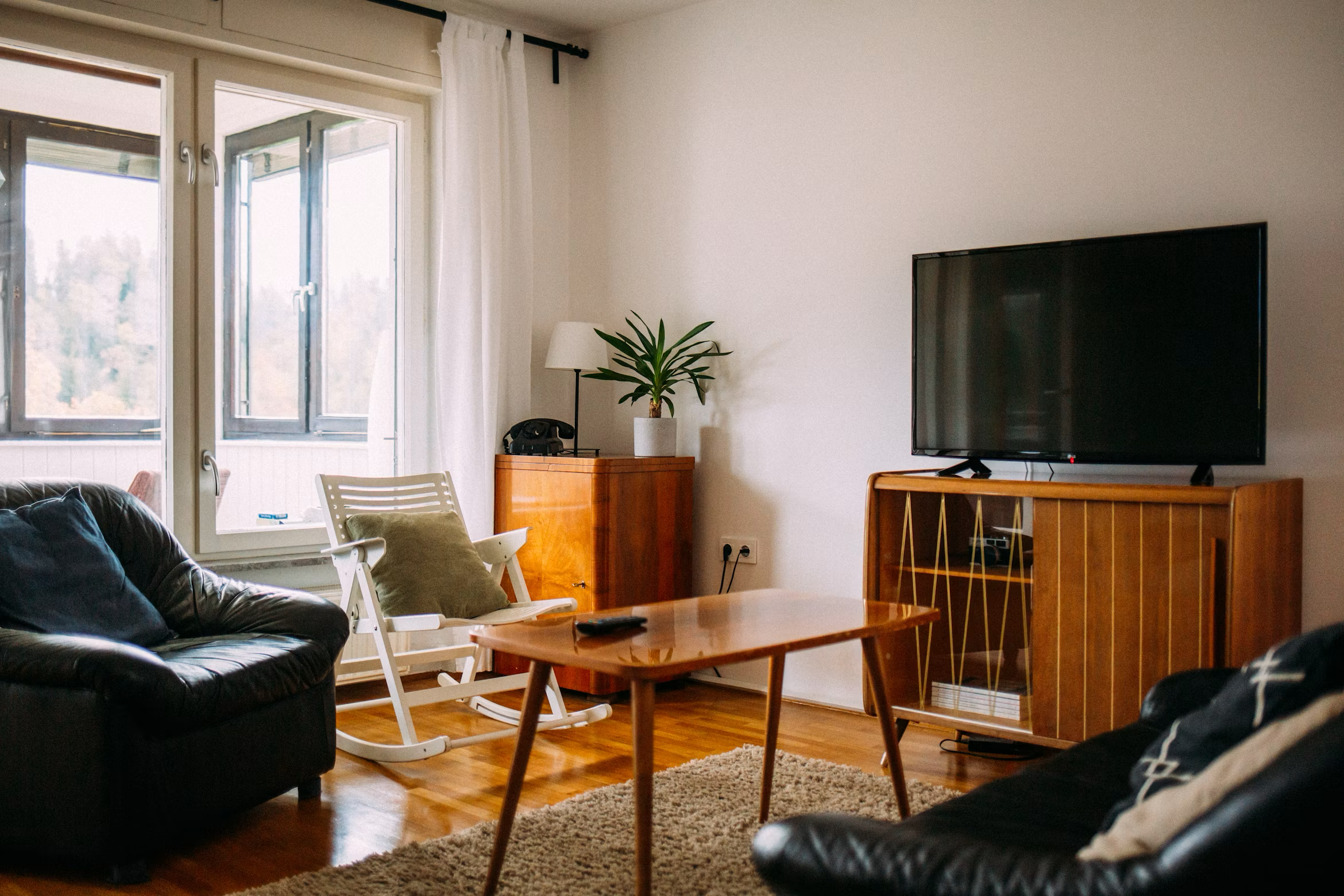
A small living room usually has one piece of furniture doing most of the heavy lifting, and it’s rarely the couch. The TV stand tends to be where everything else in the room builds up around it, remotes, cables, controllers, the stack of mail that migrated in from the entryway. Once that one piece is working properly, the rest of the room follows. Here’s how to get there, along with a few other angles that matter once the media setup is under control.
This post may contain affiliate links.
Start With the TV Stand Itself
Most TV stands are sized for the television and nothing else, which leaves the rest of the room to absorb everything a media setup actually needs: a router, a streaming box, game controllers, spare cables. Look for a stand with built-in shelving and cable management holes instead, since it solves both problems at once, giving each device its own spot while keeping the cords from turning into a visible tangle behind the screen. In a small room, this single swap often does more to reduce clutter than any organizer you’d add afterward.
Give Blankets and Throws a Real Home
Blankets are one of the fastest things to pile up on a couch, since there’s rarely a designated spot for them once they’re not in use. Rather than draping them over the arm of the sofa or stacking them on a chair, large woven storage baskets give them a spot that’s contained but still easy to grab from. It works for pillows and extra throws too, so it can absorb whatever soft goods tend to migrate toward the couch over the course of a week.
Go Vertical With a Narrow Bookshelf
Floor-to-ceiling bookcases eat up more square footage than most small living rooms can spare, but a narrow footprint changes the math entirely. That’s where the slim ladder-style bookshelf earns its spot. It holds books, decor, or bins in a fraction of the floor space a traditional bookcase needs, and its open design keeps the room from feeling closed in the way a solid cabinet would. It’s a good fit for a corner or a thin stretch of wall that a wider piece of furniture wouldn’t fit into at all.
Match Storage to What Actually Ends Up There
Before adding more furniture, take stock of what’s currently cluttering the room. If it’s mostly cables and devices, the TV stand upgrade solves most of it. If it’s soft goods like blankets and pillows, the basket does more work. Buying storage that doesn’t match what’s actually accumulating just adds another piece of furniture without solving the underlying problem.
Keep Walkways Clear
In a small living room, storage that blocks the path between the door, the couch, and the kitchen creates more frustration than the clutter it was meant to fix. Anchor larger pieces like a TV stand or bookshelf against a wall, and keep anything freestanding, like a basket or a side table, out of the main route through the room.
FAQ
What’s the highest-impact change for a cluttered small living room? Usually the TV stand, since it’s the piece most items in the room orbit around. Solving cable and device storage there tends to reduce clutter everywhere else too.
How do I add storage without making the room feel smaller? Favor open or slim pieces, like a narrow bookshelf or a stand with open shelving, over bulky closed cabinets. Open storage reads as lighter even when it’s holding just as much.
Where should toys or kids’ items go if the living room doubles as a playroom? A basket similar to the one used for blankets works well for toys too, since it can be tucked out of sight quickly before guests arrive without needing a dedicated toy chest.
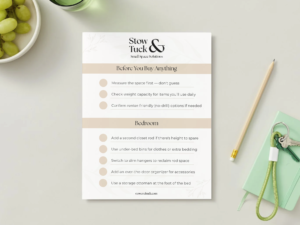
Once the media setup and everyday clutter are under control, a couple of other angles are worth a look. Best Storage Ottomans That Double as Seating covers another way to add hidden storage without extra furniture or get our free Small-Space Storage Checklist — a room-by-room guide to make the most of your space below.