Small kitchen cabinets have a way of turning into a single messy stack; plates on plates, bowls wedged sideways, pot lids sliding around loose. The cabinet itself isn’t the problem. It’s that most cabinets are built with one flat shelf per space, which wastes all the vertical room above whatever you set down first.
Here’s how to make a small cabinet hold more, without a full kitchen remodel.
This post may contain affiliate links.
Stack Two Levels Where You Only Had One
Most cabinets have several inches of empty air above a stack of plates or cans, since the shelf above is set for the tallest item you own rather than what’s actually in front of you. Stackable cabinet shelves creates a second tier inside that gap, so you can keep small items like mugs, cans, or spice jars on their own level instead of stacked on top of each other where the ones on the bottom are impossible to reach.
Stop Digging to the Back of the Cabinet
Deep or corner cabinets are notorious for swallowing items, since anything pushed to the back requires unloading everything in front of it to find. A rotating turntable organizer solves this by putting the whole cabinet within reach with a spin instead of a dig. It works especially well for oils, condiments, or anything you reach for often but that tends to migrate to the back of a deep shelf.
Give Lids a Fixed Home
Pot and pan lids are one of the fastest ways a cabinet turns chaotic, since they don’t stack cleanly and tend to slide wherever there’s a gap. An adjustable pot and pan lid rack keeps lids upright and separated by size, and most versions also hold the pots or pans themselves, so the whole set stays contained in one spot instead of spread across two or three shelves.
Sort by How Often You Reach for It
Once you’ve added vertical and rotating storage, the last step is arranging what goes where. Items used daily belong at eye level and front of shelf. Things used weekly or monthly, like a stand mixer attachment or a holiday serving dish, can move to a higher shelf or the back of a deep cabinet. This one change, sorting by frequency instead of by category, is often what makes an organized cabinet actually stay organized.
Don’t Overbuy Before You Measure
It’s tempting to order a full set of organizers at once, but cabinet depth and shelf height vary even within the same kitchen. Measure the interior of each cabinet you’re planning to organize, including the space between shelves, before ordering anything. A stackable shelf that’s a half-inch too tall simply won’t fit, and it’s a lot easier to return one item than a full haul of mismatched organizers.
FAQ
What’s the fastest fix for a cluttered cabinet? Empty it completely, wipe it down, and put items back sorted by how often you use them. Just that reset, without buying anything, usually reveals what you actually need to organize.
Are stackable shelves sturdy enough for heavy dishes? Most are rated for a solid amount of weight, but check the listed capacity before loading them with your heaviest cookware or a full stack of ceramic plates.
How do I organize a cabinet with no adjustable shelves? Add-on organizers like stackable risers and turntables work even in a fixed-shelf cabinet, since they create their own levels within the existing space rather than requiring you to move the shelf itself.
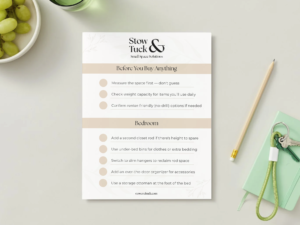
Once your cabinets are under control, the rest of the kitchen is worth a look too. How to Organize a Small Pantry (No Walk-In Required) covers food storage specifically or get our free Small-Space Storage Checklist — a room-by-room guide to make the most of your space below.