
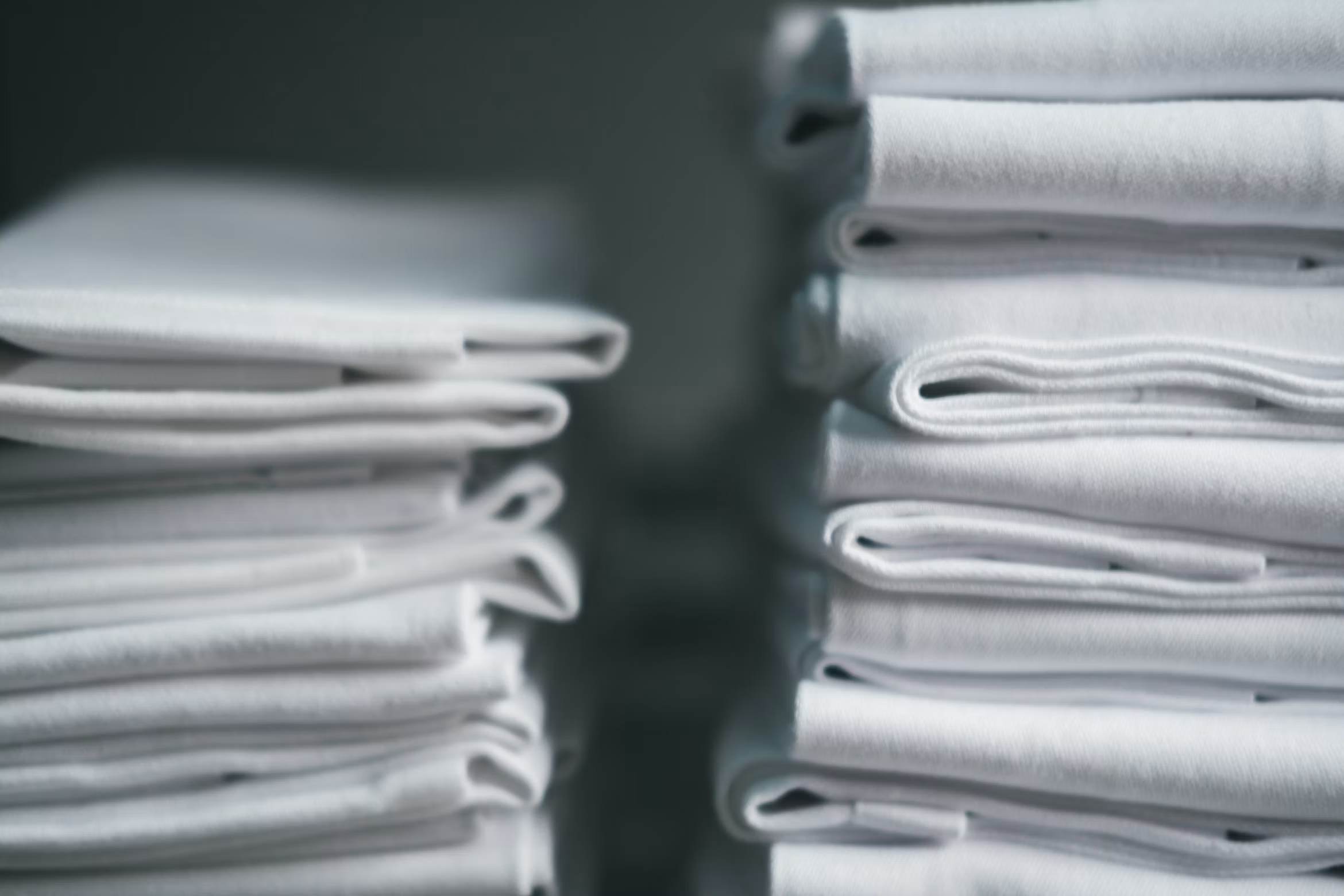
A linen closet without a system turns into a place where towels lean, sheets tangle together, and finding a matching pillowcase means unstacking half the shelf. Unlike a clothing closet, linens are mostly soft, similarly shaped items that don’t naturally stay organized on their own — they need a bit of structure to stay tidy. Here’s how to set that up, even in a small linen closet.
This post may contain affiliate links.
Why Linens Are Harder to Keep Organized Than Clothes
Folded clothes have some natural structure — hangers, drawers, distinct shapes. Sheets, towels, and blankets don’t have any of that; they’re soft, similarly sized, and prone to sliding into a single leaning pile the moment one stack gets touched. That’s why a linen closet needs dividers and containment more than almost any other closet type.
Shelf Dividers Keep Stacks From Toppling
The single biggest improvement in most linen closets comes from adding shelf dividers — simple metal or plastic panels that clip onto existing shelves to break one wide shelf into several contained sections. Instead of one leaning tower of towels that collapses the moment you pull one out, dividers keep each stack upright and separate from its neighbors. Most clip-on versions require no tools and can easily be repositioned as your needs change.
Bins for Smaller or Odd-Shaped Items
Not everything in a linen closet is a neat folded stack — pillowcases, washcloths, and smaller items tend to slide around loose otherwise. Foldable fabric storage bins with a clear window group these into a single contained unit, making them easy to see and grab as a set, rather than digging through loose individual pieces scattered around larger stacks.
Organize by Set, Not Just by Type
Instead of stacking all sheets in one place and all pillowcases in another, keep full sets together — a fitted sheet, flat sheet, and pillowcases as one folded bundle. This means grabbing what you need for one bed takes one motion instead of assembling a set from three different stacks.
Label by Size for Multi-Bed Households
If you’re storing sheets for more than one bed size (queen, twin, crib), labeling shelves or bins by size prevents the common problem of pulling out a sheet only to discover it doesn’t fit the bed you’re making. A simple label maker or even masking tape works fine here — the goal is just removing the guesswork.
Keep Frequently Used Items at Easy-Reach Height
Everyday towels and the sheets you rotate most often should sit at the most accessible shelf height (roughly eye to waist level), while less-used items — guest linens, seasonal blankets — can go higher or lower, where a bit of extra reaching is less of a daily inconvenience.
Frequently Asked Questions
How often should sheets and towels be reorganized? A quick check every few months is usually enough to keep a linen closet from sliding back into a messy pile, especially if shelf dividers are already keeping stacks contained day to day.
What if my linen closet is too narrow for standard shelf dividers? Measure your shelf depth before buying — most dividers list a minimum shelf depth requirement, and narrower, adjustable options exist specifically for shallower closets.
Should linens be stored folded or rolled? Folded works well with shelf dividers and is the more common approach for a linen closet; rolling can save some space but tends to work better for storage bins than for shelves with dividers, since rolled items don’t stack as neatly.
Looking for more closet solutions? Check out our guide on small closet organization ideas for more ways to make the most of your closet space or get our free Small-Space Storage Checklist — a room-by-room guide to make the most of your space below.